
Many video creators use CapCut because it is fast, simple, and flexible. It can help you edit video clips, add special effects, and prepare social media content. In recent years, modified versions of CapCut, often referred to as “CapCut Mods,” have also become popular. These versions typically unlock additional features and have no usage restrictions, which makes them appealing to users who want more editing freedom. Interestingly, before it was widely known as CapCut, the app was originally released under the name Viamaker, which shows how it has evolved over time into a more powerful and widely used editing tool.
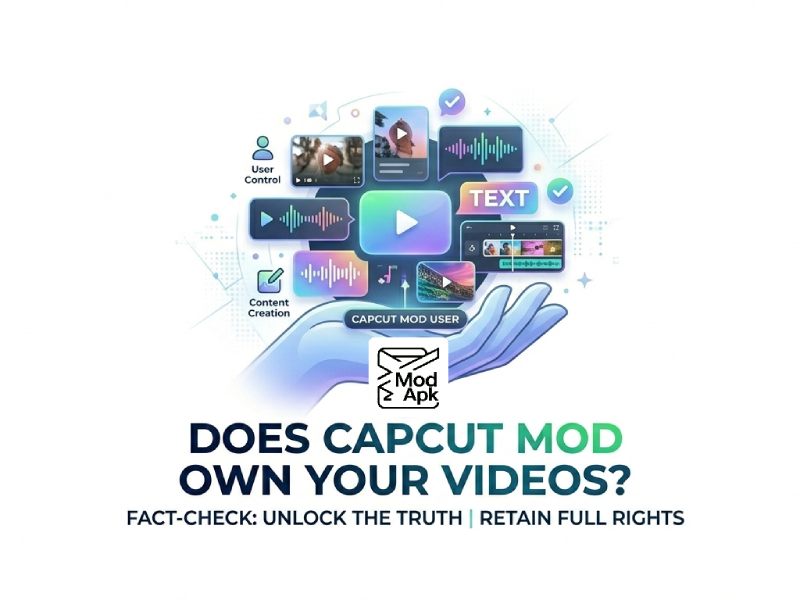
But creators have always had one question: Does CapCut Mod own your video? Or more broadly, what rights does the platform have over your content?
To understand this clearly, we need to understand how video applications handle user content, the true meaning of “ownership” in digital tools, and how mod versions change the rules.
Understanding Video Ownership in Editing Apps
When you create a video using any editing application, such as a CapCut video project, you have complete control over the original materials you use, such as recorded video clips, photos, audio recordings, and screenshots. The application itself does not generate this content, so it does not own the content. The final product is determined by your creative input, not the software used to create it.
Ownership of digital tools is often misunderstood because applications require certain permissions to function properly. These permissions are usually temporary and are essentially technical in nature. None of these operations will transfer ownership. They simply allow the application to fulfill its role as an editor.
The final exported video is the clearest representation of ownership. Once exported, the file becomes a standard media file on your device. It is no longer tied to the editing environment. At this point, you are free to move, upload, or reuse it on different platforms. Once exported, the editing tools have no control over how you use it.
Where CapCut Mod Fits In
CapCut Mod has a slightly different target audience than the official CapCut app. It remains a video editing tool, but its distribution and usage have changed people’s usual understanding of it. In many cases, users turn to it for more flexible workflows, and when exploring CapCut video edit features, they often focus on faster editing styles, simplified templates, and broader content-sharing habits rather than traditional professional editing needs. To illustrate this more clearly, we can break it down into the following key points:
It is still an editing tool at its core
CapCut Mod does not change the basic functionality of the application. You can still import clips, edit scenes, add effects, and export the final video. From a creative perspective, it is no different from a regular editor, and your workflow will not change.
It does not introduce new ownership rules
Even though it is modified, it does not create a new system for content rights. Your videos are still treated as files on your device. The app does not become the owner of what you shoot or produce. It simply processes the material you give it.
It may change how features are accessed
In many cases, CapCut Mods focus on unlocking or modifying features beyond those in the official version. This may affect the smoothness of some tools, but it will not change the final output. The exported video remains entirely under the creator’s control.
In general, CapCut Mod follows the same creation process as CapCut, but its usage is more informal. Its function is purely technical, designed to assist the editing process, and does not change the ownership of the final video.
What “Ownership” Really Means for Creators
Many creators misunderstand the copyright ownership of editing platforms. They believe that using a certain application could give the company control over their content. In fact, copyright ownership involves two aspects:
- Copyright ownership
This is the legal right to your creative work. If you filmed, edited, or designed something, you own it. - Platform usage rights
This refers to how the app is allowed to handle your content while you use it. For example, uploading, saving drafts, or applying effects.
Even official apps have limited usage rights. They do not transfer the copyright to the platform.
CapCut Mod does not change copyright law; it only changes how the software works on your device.
Exported Videos and Final Control
After the video is exported from CapCut or CapCut Mod, the final file will become a separate file on the device. At this point, since the editing process is complete, control is much clearer.
The file exists outside the app
After exporting, the video will be stored locally on your phone or computer. It is no longer associated with editing items within the application. This means that the application no longer actively processes or manages the file. You can move, copy, or edit the file using other tools without having to rely on CapCut again.
Full control stays with the creator
The exported video is entirely under the creator’s control. You can upload it to platforms like TikTok, Instagram, or YouTube, or you can keep it on your device and not share it publicly. The editing app does not impose any restrictions on how the exported file can be used.
No ongoing platform involvement
After exporting, CapCut or CapCut Mod will no longer interact with the video file. It does not update, track, or modify the content. The output is static, which means it behaves the same as any other ordinary media file stored on the device.
Easy transfer between tools and platforms
Because the exported file is in a standard video format, it can be opened in other editors, shared via instant messaging applications, or transferred between devices. This flexibility emphasizes that ownership and control always remain in the hands of the creator, not the tool.
Final result is independent
Most importantly, the exported video file is independent; it is no longer part of the editing environment. Regardless of the tool used to create it, it only matters during the creation process; once the file is created and saved, it becomes irrelevant.
Cloud Features and Account-Based Storage
Some users will link their editing projects to cloud storage through their accounts. This allows them to save drafts to the cloud, rather than being limited to a single device, which also helps them better manage video copyright concerns when organizing and backing up their work. This is very useful when switching phones or continuing a project later without having to start from scratch.
In the official app, cloud storage is primarily used as a backup and synchronization system. It helps store project files, settings, and sometimes even draft versions of videos. These files will be saved so that users can access them again after logging into the same account.
CapCut Mod versions may include similar functionality, depending on how they are built, but the core concept remains the same. The cloud is merely a convenient storage space, not a transfer of content control. Creators can still decide which content to keep, edit, or delete, and the final exported video is always retained on the user’s device.
Practical View for Everyday Creators
If you are a content creator using CapCut or CapCut Mod, you might want to set aside the technical jargon and look at the whole process from a more practical perspective. Most confusion about ownership stems from confusing tools, storage, and creative rights, but in everyday use, they are actually quite distinct.
From this perspective, CapCut or CapCut Mod is more like a workspace than a content holder. You can open a project, organize the elements, test different versions, and finally determine which version is the most suitable. No action taken during the entire process will change the identity of the original creator.
Another way to understand this is to distinguish between “working files” and “final files.” A working file refers to a draft you create within the application, which may contain layered edits, effects, or temporary adjustments. The final file is the file you export and save to your device. In everyday use, most creators only care about the final version because the final version will be uploaded, shared, or reused elsewhere.
The practicality of using CapCut lies in control, not in legal concepts. You decide what to enter, what to modify, and what to export. The application will follow your instructions step by step, and you will have complete control over the outcome of your creative work.
Final Thoughts
Does CapCut Mod own the copyright to your videos? The answer is simple: no. CapCut and its modified versions do not own the copyright to your content. They are simply tools to help you edit and create videos.
As long as the content is original or legally obtained, the copyright always belongs to the creator.
More importantly, it is necessary to understand how each tool works, how files are stored, and how workflows are organized. Once you figure these things out, you can focus more on creating content without worrying about copyright issues.